
Scaling beyond the myths

What 300+ studies reveal about how companies scale

People looking forward
Scaling a company is one of the most exciting stretches of any growth story. It is also one of the most misunderstood. There is no shortage of advice on how to do it. Some of it rests on solid evidence. A good deal of it is intuition that has been repeated often enough to pass for fact. 

Together with Antwerp Management School, we decided to take a closer look. Over several months we screened more than 2,800 academic studies published in the last 25 years, then kept the 350 strongest. We held ten of the most common beliefs about scaling against what that research truly shows. 

The result is Debunking scaling myths, a research-based look at how companies really scale. 
What scaling even means

Myth 1: "When we talk about scaling, we all mean the same thing." 

The word turns up in every strategy deck and every board meeting, always with confidence and rarely with a definition. Founders, investors and advisors nod along, each picturing something different. Research shows scaling is layered and multi-dimensional, and that the confusion starts before anyone has grown at all. 

Myth 2: "Scaling is about how fast you can grow." 

Speed is the scoreboard everyone watches. Yet many of the fastest-growing companies never turn a profit, and some research suggests that growing too quickly can actually shorten a company's life. The report looks at what separates real scaling from a fast revenue curve. 

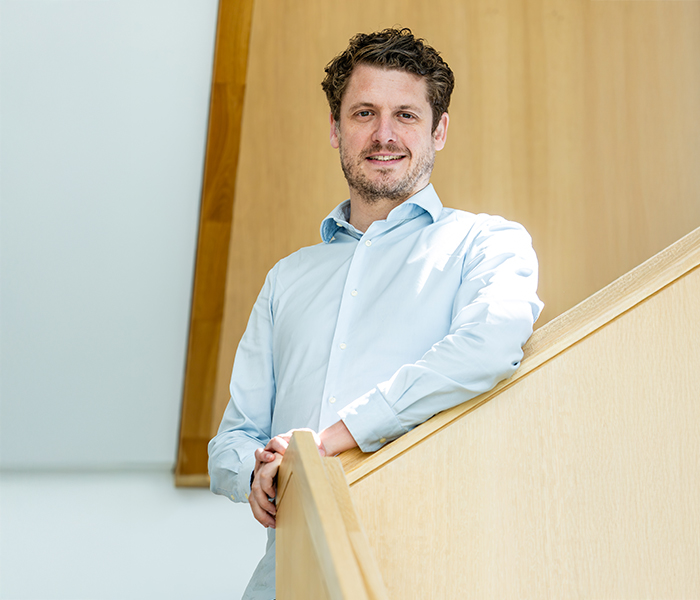
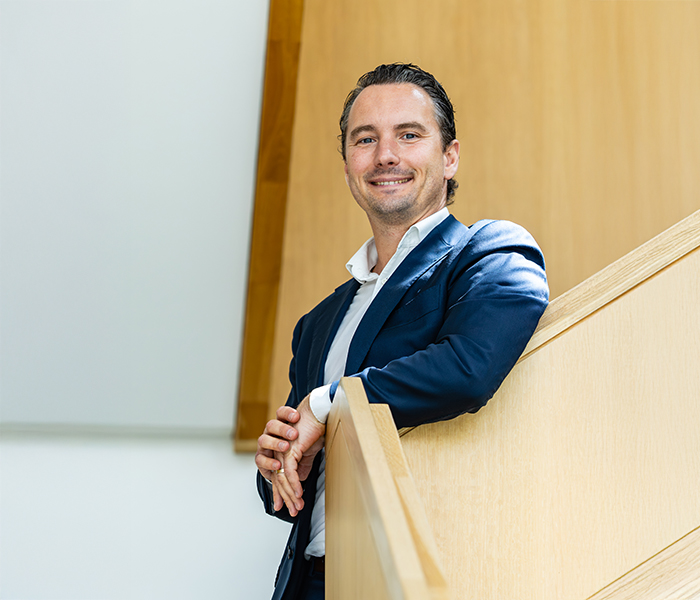
People smiling & looking forward.

If Europe wants to build more globally competitive companies, we need to move beyond simplistic growth metrics and develop a more sophisticated understanding of what scaling actually requires.

Prof. Dr. Robin De Cock

The engine behind the growth

Myth 3: "If the product or offering is great, it will scale itself." 

A strong product earns early traction, and that traction can feel like proof that the rest will follow. It rarely does on its own. Whether you can serve ten times the customers without straining depends far more on the system around the product than on the product itself. 

Myth 4: "First win the customers. You can build the engine later."

Sell first and organise later sounds like the prudent order of things. The evidence points to a more demanding answer, where the engine and the demand have to develop together. Win customers you cannot yet serve at scale, and growth becomes a problem rather than a prize. 

What happens inside the company

Myth 5: "If you want to scale successfully, the founder's role must shift significantly." 

At some point the founder has to let go, or so the story goes. There is truth in it, but no single script. Some founders step back, some move from execution to strategy, some stay firmly at the centre, and in the report, we examine what predicts which path works. 

Myth 6: "Without substantial financial resources, fast scaling is impossible." 

Big funding rounds make headlines, and it is easy to read them as the cause of growth rather than a consequence of it. Capital can certainly accelerate scaling. What the research keeps finding is that it rarely explains why scaling succeeds, and that tighter resources can sharpen the very discipline scaling needs. 

Myth 7: "Scaling is about professionalising your organisation, the sooner the better."  

More structure, more process, more management, and the earlier the better. It is sensible-sounding advice that the evidence only half supports. Add too much too soon and you can trade away the agility that got you this far, which is why timing and fit matter more than speed. 

Scaling an organisation does not mean you need to trade entrepreneurship for professionalism. Effective scalers combine the discipline needed for growth with the agility that made them successful.

Max Mariens

The world outside your walls

Myth 8: "Regulation prevents founders from scaling." 

Rules are usually cast as the thing standing between a founder and their next market. They can certainly create friction. They can also build trust, signal credibility and shape the markets you are trying to enter, which makes the picture more interesting than a simple brake on growth. 

Myth 9: "If you can afford to acquire, you should. It beats building organically." 

Buying capability looks faster than building it, and for firms under pressure to grow that logic is hard to resist. But the difficulty tends to move rather than disappear, landing squarely on integration, where different systems, teams and cultures have to become one.  

Myth 10: "Saturated markets don't allow for new ventures to scale."

A crowded market full of strong incumbents can feel like a closed door. The research tells a more encouraging story, with high-growth firms emerging in mature and even declining industries. What changes is not whether you can scale, but how. 

Scaling is powered by replication on purpose. It comes from deploying business models and operating set-ups that work for the organisation, consistently, every day.

Dave Vanhaute BDO

What you'll find inside the report

The full report works through each myth with the studies behind it, what it means for your own growth and short reflections from our BDO experts and from Antwerp Management School. 

Scaling is hard enough without building on advice that does not hold up. Start from the evidence instead. 

Download the Debunking scaling myths report