
Effective project management is essential for strategic success. A Project Management Office (PMO) serves as the backbone of that effort. It provides the methodology, governance and oversight to ensure successful project delivery.
Yet many PMOs face persistent challenges such as undefined processes, strategic misalignment, inefficient resource allocation, and inadequate governance structures. These hurdles can prevent PMOs from achieving consistent project success. Overcoming them requires effective integration of both project management and change management. And a deliberate path towards a higher level of maturity.
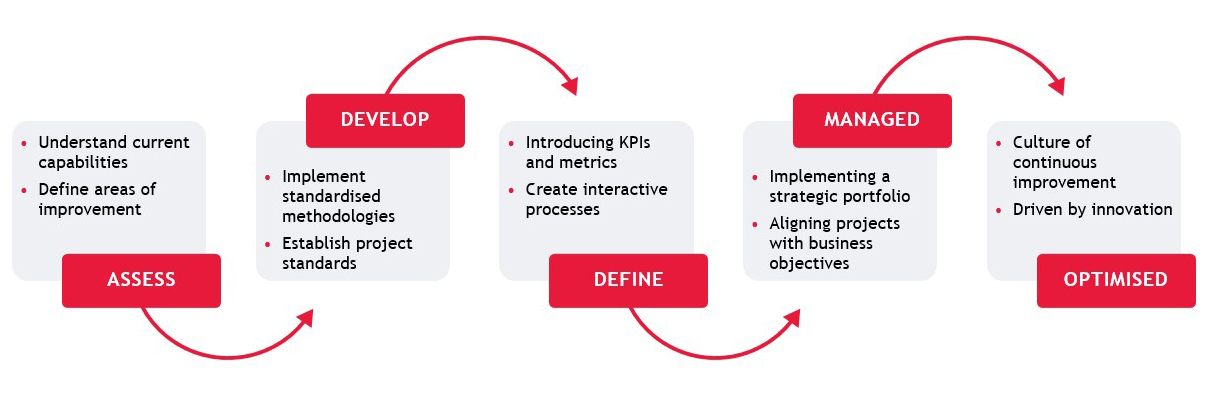
To help organisations get there, BDO experts use a five-step approach incorporating insights from maturity models and best practices. Elevating a PMOs maturity involves overcoming inherent challenges and building on what already works to reach a level of performance that truly supports your organisation’s ambitions.
Yet many PMOs face persistent challenges such as undefined processes, strategic misalignment, inefficient resource allocation, and inadequate governance structures. These hurdles can prevent PMOs from achieving consistent project success. Overcoming them requires effective integration of both project management and change management. And a deliberate path towards a higher level of maturity.
To help organisations get there, BDO experts use a five-step approach incorporating insights from maturity models and best practices. Elevating a PMOs maturity involves overcoming inherent challenges and building on what already works to reach a level of performance that truly supports your organisation’s ambitions.